



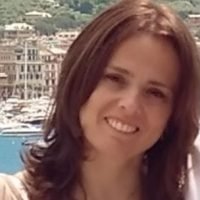
Abstract:
The rapid growth of renewables, distributed energy resources and storage technologies has accelerated the development of smart multi-energy power grids. These systems integrate electricity, heat, hydrogen and power-to-x technogies, to increase the power grid flexibility and to achieve higher efficiency and sustainability in local energy supply.
This keynote is focused on optimization-based Energy Management Systems (considering different architectures: decentralized, distributed and hierarchical) capable of managing distributed resources across energy communities where diverse flexibility options—battery storage, hydrogen production and storage, manufacturing plants and logistics operations, electric vehicles, and intelligent buildings—are coordinated to minimize costs, emissions, etc., and to participate to demand response programs.
Special emphasis is placed on the role of electric vehicles, and specifically on optimal charging through allocation, scheduling, and sequencing, also considering different tasks, energy consumptions over a path, and/or possible logistics operations.
Finally, the talk will provide some insights on how interconnected energy networks create additional layers of flexibility, providing advantages in terms of costs, emissions and other performance indicators.
Short Bio: Pr. Michela Robba is an Associate Professor of Systems Engineering at the University of Genoa. She received the Degree in Environmental Engineering in 2000, and the PhD in Electronic and Computer Engineering in 2004, from the University of Genova. The research activity is focused on optimisation and control of smart grids, electric vehicles, renewable energy resources, and natural resources management. She is a member of the scientific board of the Italian Energy Technological Cluster, and she is the President of the Liguria Region (Italy) Energy Consortium. She is Senior Editor for the journal IEEE Transactions on Automation Science and Engineering, and Associate Editor for International Journal of Robotics and Research, IEEE Transactions on Cybernetics, and Control Engineering Practice. She has joined several International Program Committees at conferences in the field of control and optimisation, and she is a member and vice-chair of different IFAC Technical Committees. She is Chair of the IFAC Technical Committee 6.3 Power and Energy Systems, and she is Chair of the IFAC Coordinating Committee Power, Energy and Sustainability. Actually, she is a lecturer for the courses ”Simulation of sustainable energy ”, ”Models and methods for Energy Engineering”, and ”Methods and models for logistics” at the Polytechnic School of the University of Genova. She is author of more than 150 publications in international journals, books and proceedings of international conferences. Main publications can be found at: https://scholar.google.it/citations?user=baTT1PwAAAAJ&hl=it
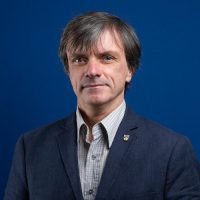
Abstract:
The presentation embraces environmental issues related to the energy conversion technologies and related greenhouse gas emissions, showing how the solar technologies, the photovoltaic ones being the most important, can drive the Countries towards a new system of infrastructures where the distributed and utility scale diffusion of small and large solar plants will be the backbone of the electricity and thermal energy production.
Short Bio: Professor Fossa attained his PhD in Thermal Engineering at the Faculty of Engineering, University of Genova (Unige, www.unige.it), Italy, in 1993 . Since 1993 Professor Fossa worked at the Faculty of Engineering of the University of Genova, Italy (to date at Dime, Department of Mechanical Engineering, Energy, Management and Transportation) as full time senior researcher and since 2007 as full time associate professor. During this period Prof. Marco Fossa has several visiting research appointments, including an overall one year spent a CERN Geneva and one and half overall year spent at UNSW Sydney. Since October 2017 he is full Professor of Applied Thermodynamics and Heat Transfer (Ing-Ind10 Scientific Sector) at Dime Department (www.dime.unige.it)
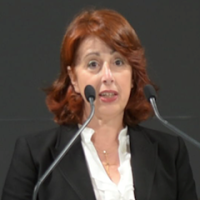
Abstract:
IoT paradigm has revolutionized our daily routine life, connecting a plethora of smart devices, sensors, frameworks, intelligent systems and humans, in order to provide innovative solutions to everyday problems. With the advent of ΙοΤ, Cyber-Physical Systems (CPSs) constitute a disruptive technology, changing the way we perceive agriculture. As they comprise of parts monitoring the environment, crops and livestocks, interacting with farm equipment and the farmers’ themselves, while having computing and communication capabilities, they constitute a prominent example of systems-of-systems, while the autonomous operation of their components should be ensured. Their autonomous components should be smart enough to adjust in the environment they operate, managing faults and missing data, while learning from their peers. The presentation targets at open issues in IoT SoS systems targeting agriculture, to promote their autonomy utilizing AI tools and methods and discusses ongoing projects in three different levels: 1) Smart aggregators to manage sensor and actuators at the edge. The development of a smart middleware on data imputation for environmental data will be explored as a case study. 2) Service integration in a smart IoT infrastructure ensuring the quality of complex services provided to users. A quality-aware event-based platform for the coordination of micro-services aiming at the development of smart farm application and the notion of event fabrication to manage missing events from sensors will be presented. 3) The interaction of farmers with their smart infrastructure and their wiliness to adopt this disruptive technology. A multi-view design approach focusing on human concerns towards smart agriculture systems will be discussed. These efforts are presented in the context of specific case studies, targeting environmental data management, smart greenhouse management and smart farm management, in the context of EU funded projects.
Short Bio: Pr. Mara Nikolaidou is a Professor in the Department of Informatics and Telematics at Harokopio University of Athens, since 2007. Prior her appointment she worked as a computer engineer in the private sector and as IT consultant for the government. She served as the Rector of the University from 2016-2024. She was appointed as the representative of Greek Universities in the European University Association (EUA) for 2023-2024. Her research focuses on distributed systems and complex system design. Over the last years she actively participated in numerous research projects funded by national, European and international agencies on system engineering, the Internet of Things, Cloud and Edge computing, Cyber-physical Systems and Smart Cities, emphasizing human-in-the-loop and autonomous systems. Recently, she explores responsible computing and ethical requirements in system design. She has published more than 200 papers in international journals and conferences and actively participates in the organization of international conferences in the area of software and systems engineering. She is a member of IEEE (SMC society) and Systems Council. She also participates in OMG, in the working groups for SysML and responsible computing.
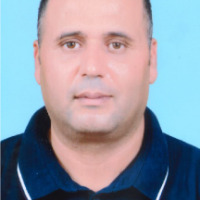
Abstract:
Agricultural activities in arid regions face development problems related mainly to the scarcity of resources, severe climate change effects, and increasing internal demand and regional tensions. In this regard, Qatar has recently put much efforts into increasing its local food production to reduce the quasi reliance on food imports. For instance, Qatar has achieved a remarkable progress towards self-sufficiency in fresh dairy products, poultry meat, and greenhouse vegetables. However, this increase has exerted more pressure on the limited resources, in particular groundwater and arable lands. To this end, efforts have been directed into investigating non-conventional inputs such as high quality treated wastewater, biosludge, and farm manure to promote fodder production in open field systems. Besides, the huge amount of crop and animal residues generated from the emerging agri-businesses could be recycled into useful soil conditioners such as biochar to achieve circularity in agricultural systems. On the other hand, the rapid development of greenhouse sector aims to sustainably increase vegetable production up to 70% by 2030. In this regard, heavy investments have been allocated to promote the implementation of smart greenhouses and fully controlled « vegetable factories » to cope with the adverse pedo-climatic conditions more efficiently. Besides, the agricultural research has been prioritized to investigate novel and eco-friendly pathways that enhance local crop production such as nanotechnology applications and natural bioactive compounds.
Short Bio: Dr. Helmi Hamdi is currently a Research Associate Professor at the Center for Sustainable Development, Qatar University, in charge of the Food and Water Security Program. He obtained a MS degree in Agricultural Engineering from the National Institute of Agronomy, Tunisia (2000), and a PhD in Environmental Science and Resource Management from Okayama University, Japan (2006). He also holds a Habilitation degree in Agri-Environmental Sciences earned in 2017. He has been awarded several prestigious scholaships to carry out advanced research under the Japanese MEXT and JSPS, the US Fulbright, and the German DAAD programs. As of September 2025, He has published two books, four book chapters and more than 70 peer-reviewed papers, conference papers, and research reports in the fields of sustainable crop production improvement, agricultural valorization of non-conventional inputs, and nanotechnology applications in agriculture.
Abstract:
Moroccan agriculture faces growing energy demands due to population growth, irrigation needs, and climate challenges. Developing a framework to address these requirements is crucial for improving efficiency and sustainability. This framework integrates renewable energy sources such as solar, wind, and biomass into agricultural operations. It focuses on optimizing energy use in irrigation, processing, and storage to reduce costs and environmental impact. Policymakers and researchers can use this model to guide investments in clean technologies adapted to local conditions. Smallholders benefit through improved access to energy and greater productivity. The framework also supports national goals of energy transition and rural development. By aligning technical, economic, and environmental aspects, it promotes sustainable agricultural growth. Ultimately, it strengthens Morocco’s resilience to climate change while ensuring food and energy security.
Short Bio: Professor Amin BENNOUNA is an active retiree who taught physics from 1980 to 2022 and has published over 300 various publications. He won a National Research Award in 2009 and led two energy companies (until 2005 and 2018) which made him hold various responsibilities within AMISOLE-FENELEC until 2016. After coordinating two European “Medcampus” projects (1990-95), he led the “Propre.ma” project (2014-2017), built two energy scenarios for Morocco by 2030 (2007) and 2050 (2024). Currently, he meets the needs of 111 journalists in Morocco in their information on energy in the country.
Abstract:
Agroecology integrates ecological principles into farming systems, promoting sustainability and resilience. It emphasizes biodiversity, soil health, and locally adapted practices that reduce dependence on fossil fuels and chemical inputs. By enhancing natural resource efficiency, agroecological systems sequester carbon and limit greenhouse gas emissions. Farmers adopting these methods benefit from improved soil fertility, water retention, and crop diversity, which strengthen their resilience to droughts and floods. Agroecology also builds social resilience through community-based knowledge exchange and shorter food chains. Diverse cropping systems and agroforestry increase both productivity and ecological balance. Such practices restore degraded lands, improve ecosystem services, and contribute to food security. Moreover, agroecology aligns with global efforts to achieve climate justice and sustainable development. It represents a pathway toward transforming agriculture from a climate problem into a climate solution.
Short Bio: Cherki GHOULAM is a full professor at Cadi Ayyad University (UCA), Faculty of Sciences and Techniques of Marrakech and affiliate professor at Agrobiosciences Program of Mohammed VI Polytechnic University, Benguérir. He is specialist in agroecology and crop physiology. He is member of the Excellence Laboratory of Agrobiotechnology & Bioengineering and the Agrobiotech Center. He is conducting research works on grain and forage legumes, their nitrogen fixing symbiosis with soil rhizobacteria and their interactions with the most prevailing climate change-induced abiotic stresses in Morocco and Africa. His research experiments are based on laboratory, greenhouse and field trials with focus on the selection of resilient legume genotype-rhizobia strains combinations more performing for biological Nitrogen Fixation mainly under the abiotic constraints (water deficit, salinity, P deficiency) and the study of their beneficial agroecological roles, through rotation and intercropping, for the agrosytem. Identification of alternative crop species and efficient farming practices to deal with soil salinity and develop biosaline agricultural system is one of the main objectives of his research activities. He focuses also on deciphering the agro-physiological and molecular mechanisms involved in the tolerance of legumes, their rhizobacterial partners and other crops to abiotic stress, imposed by climate change. He coordinated about 20 projects on these research topics in close collaboration with many national institutions and international organisms throughout the world.
Abstract:
Microbial activity in soil and porous media constitutes a major factor for various key ecological issues: carbon sequestration, soil fertility, soil auto-remediation capabilities, oil reservoirs depollution, pesticides biodegradation… Biological dynamics in porous media depend strongly on the micro-structures where the processes take place.
Since a few decades, the most advanced X-scanner tomography sensors can produce high resolution 3D (volume) images of soil (porous media) samples providing micro-scale (a few micrometers) pore space description. Thus, the real pore space structures at microscale can be taken into account when modelling biochemical processes. Indeed, the geometry of the pore space micro-structures influences significantly the transformation-diffusion processes related to microbial life. In most cases, similarly to many physical sciences issues, the analysis of the phenomena at macroscopic scale is not enough for understanding and then predicting the systems behaviors. This is a key reason why advances in soil sciences has been slowed down in last decades because considering only macroscopic properties . Thus, the modelling of biological dynamics in porous space (soil, rocks,…) at micro-scale constitutes a major nowadays scientific challenge. This key note speech will address the computational modelling of biological dynamics at microscale in porous media (soil, rocket, fluid…) from 3D CT images which provides an exact real pore space description.
Short Bio: Pr. Olivier Monga is Research Director at the French National Research Institute for Sustainable Development (IRD). He is a computer-vision scientist turned computational environmental modeler. He develops geometry-aware, high-performance methods that operate directly on CT-resolved pore architectures to simulate microbial processes. He authored a classical reference book and 100+ papers, and collaborates widely with academic and industry partners through multi-institutional projects.
Abstract:
At this moment, and in the frame of a research, innovation and development, our laboratory of Advanced Systems Engineering -ISA- has begun a massive implication of the Data Analysis, On-Board Computing, Intelligence, and Cybersecurity applied to IoT platforms that cover different application fields, like: Smart Health, Smart Transportation, Smart Industry, Smart Energy, …. In those fields a series of papers have been published and interesting and correctly working IOT platforms have been implemented.
Since 2022 and in the frame of a the APRD/SCAISAR research project in collaboration with Mohamed VI University of Polytechnics UM6P, National Centre of Scientific Research -CNRST-, and the Cherifian Phosphate Office -OCP-, I’m hardly working on green, intelligent, and secured robotics-based solutions to be integrated in Moroccan precise greenhouse aiming to optimize the farming OT platforms, ensure its integrity protection using blockchain watermarking-oriented, analyze and act on farming data, and preserve vital resources, like: WATER, ENERGY & FERTILIZERS.
To achieve the intended goal, encouraging and promising findings have been obtained. Additionally, an advanced IOT platform has been tested, and the validation test is currently being conducted. Certain goals, such as comprehending farming data, organizing and optimizing data concerning size, quality, security, and communication, have been proven to be achievable. Additionally, significant advancements in robotics, autonomous navigation, 3D mapping, and computer vision have been made in the areas of the environment and plant’s health data gathering (objective and subjective data), data analysis, modeling, missed data prediction and forecasting managing advanced intelligent models, and customized robot design, on-board devices and adapted actions to agriculture field. These developments are proceeding well, and the findings have been published as well as the validation test have been successfully done, and further actions are under investigation and development.
Short Bio: Pr. Abderrahim Bajit graduated from Mohammed V University of Rabat and the National School of Telecommunications Systems, INPT Rabat, with a B.S. in electronics in 1989, an Aggregation degree in electronics, an M.S. in computer science, telecommunications, and multimedia in 2004, and a Ph.D. in mobile TV coding and transportation in 1993, 1998, 2004, and 2011. He has been employed as a higher education professor at the National School of Applied Sciences ENSA of Kenitra since 2011. He teaches courses in the areas of computer sciences, embedded systems, Internet of Things IOT, On-board Computing, Intelligence and Cybersecurity.
Abstract:
For a decade we learn about autonomous growing, big data, better plant performance and so on. Startups rise to the occasion and legacy firms (like Priva) are stepping up to make it work, both in own product development and in enabling third parties.
The presentation will zoom in on the benefits of a right use of Artificial Intelligence for the grower, the consumer and the environment.
A small breakout in AI, followed by mentioning some challenges linking hardcore algorithms to softcore plants will all their perks and features. Controlling living organisms is a bigger challenge than controlling tech.
What might be a good way to deal with all these challenges in the field of sensors, hardware, software and human behavior.
Short Bio:
Dr. Jan Westra works at Priva, mainly for research and development projects in horticulture and indoor growing technology.
He graduated M.Sc. at TU Delft in 1985, Faculty of Mechanical Engineering. Subsequently did PhD research at the same department.
After TU Delft he worked at an HVAC consultancy firm in Rotterdam.
In 1996 he joined Priva. For the development of equipment for water treatment for greenhouses, partly for directing research projects with universities and colleges. Examples: KU Leuven, Wageningen UR, UF, OSU and TU Delft.
Jan Westra is specialist in vertical farming, where the horticulture and building worlds come together. On behalf of Priva he was and is involved in many initiatives in this field worldwide.
His focus is on the MENA region, USA and Canada, connecting to research and universities and focusing more and more on smart water use and treatment.
Abstract:
The growing global demand for sustainable food production and the scarcity of arable land are accelerating the adoption of controlled-environment agriculture, with vertical farms (VFs) emerging as an innovative solution. However, their high energy consumption poses significant challenges to both sustainability and economic feasibility. This talk presents advanced decision and control techniques designed to optimize crop growth conditions while reducing energy costs and enabling participation in demand response programs. In particular, it introduces a novel control framework integrating vertical farm operation with dynamic energy market participation through centralized and decentralized receding horizon control strategies. Experimental and simulation results highlight the benefits in terms of cost reduction, scalability, and environmental sustainability, demonstrating the potential of control-based optimization to enable efficient and resilient agricultural systems.
Short Bio: Pr. Raffaele Carli, received his Laurea degree in Electronic Engineering with honours in 2002 and his Ph.D. in Electrical and Information Engineering in 2016, both from Politecnico di Bari, Italy. From 2003 to 2004, he was a Reserve Officer with Italian Navy. From 2004 to 2012, he worked as System and Control Engineer and Technical Manager for a multinational company in the space and defense sector.
Currently, he is an Associate Professor in Systems and Control Engineering at Politecnico di Bari, where he is the technical lead for the Decision and Control Laboratory (http://dclab.poliba.it/), coordinated by prof. Mariagrazia Dotoli, within the Department of Electric and Information Engineering . He has held national qualifications as a Full Professor since 2023. Since 2022, he has served as Vice-Coordinator of the National PhD program in Autonomous Systems (http://dausy.poliba.it/phd/).
He serves on the editorial board of IEEE journals as an Associate Editor for IEEE Transactions on Automation Science and Engineering (awarded Best Associate Editor in 2023 and 2024) and IEEE Transactions on Systems, Man, and Cybernetics. He is also an active member of the conference editorial boards of various events sponsored by IFAC and IEEE, including those sponsored by the IEEE Control Systems Society (CSS), IEEE Robotics and Automation Society (RAS), and IEEE Systems, Man, and Cybernetics Society (SMCS). His organizational roles include positions on the committees of several IEEE conferences (IEEE CASE 2017, CASE 2020, SMC 2023, CASE 2024, ICIEA 2026). He also served as the General Co-chair of 7th International Conference on Renewable Energy and Conservation (ICREC 2022) and General Chair of the 2025 IFAC Workshop on Smart Energy Systems for Efficient and Sustainable Smart Grids and Smart Cities. He currently is General Co-chair of the IEEE International Congress on Smart Agriculture and Sustainable Systems Engineering (SmartAgri&SuSY 2025), December 5-9, Marrakech, Morocco.
An IEEE Senior Member since 2022, he currently serves as the Mentorship Subcommittee Chair within the IEEE SMCS for the 2023-2025 term and the Secretary of the IEEE Italy Section Chapter CS23 of the CSS for the 2025-2026 term.
He is an author of over 130 printed international publications (Google Scholar profile: https://scholar.google.it/citations?user=OvXT8Y0AAAAJ&hl=en). His research focuses on developing decision and control techniques for modeling, optimizing, managing, and controlling complex, large-scale systems, particularly in smart frameworks such as industry, logistics, and energy. He received the 2024 IEEE Italy Section SMCS Chapter Award for Excellence of Early Career Researchers.
For additional information, visit: http://dclab.poliba.it/people/raffaele-carli/
Short Bio: Pr. Roberto SACILE, full professor in industrial automation and systems engineering, invited professor in systems engineering at Sorbonne Université – UTC, received the Laurea degree in electronic engineering from the University of Genova, Genova, Italy, in 1990, and the Ph.D. degree from Milan Polytechnic, Milan, Italy, in 1994. He has been holding a postdoctoral position at the French National Institute for Research in Computer Science and Control (INRIA), Sophia Antipolis, France. He is at the University of Genova, Department of Informatics, Bioengineering, Robotics, and Systems Engineering, where he is the Head of the Systems Engineering Lab. He is an Associate Editor of the IEEE ACCESS. His main research interests are related to decision support methodologies and optimal control techniques with specific applications to energy, environmental and transport systems.
Short Bio: Pr. Ahmed OUAMMI received the Ph.D. degree from the Faculty of Engineering of Genoa, Italy, in 2010. He was a Research Fellow with the University of Genoa and an Assistant Professor with the National Centre for Scientific and Technical Research (CNRST). He was an Associate Professor with Qatar University. Currently, he is affiliated with the Department of Electrical Engineering, ETS Montreal.His research interests include artificial intelligence application, control and optimization of smart systems and microgrids, with special focus on the implementation of original methods, models and optimal control algorithms with applications to cooperative and interconnected smart systems
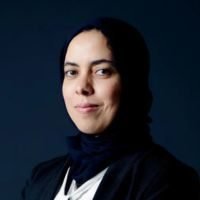
Short Bio: Pr. Hanane DAGDOUGUI (Member, IEEE) received the Ph.D. degree in systems engineering from the Faculty of Engineering of Genova, Genoa, Italy, and the Mines Paris-Tech in France, as part of an international joint Program in 2011. She is currently a Professor with the Department of Mathematics and Industrial Engineering, Polytechnique Montreal, Montreal, QC, Canada. Prior to joining the Polytechnique Montreal in 2017, she was a Research Assistant with the Department of Informatics, Bioengineering, Robotics, and System Engineering, University of Genoa, Genoa, Italy, in 2013.From 2013 to 2016, she was an institutional Researcher with the Department of Electrical Engineering, ÉTS Montreal, Montreal, QC, Canada. She has authored or coauthored in the IEEE TRANSACTIONS ON SMART GRIDS, IEEE TRANSACTIONS ON INDUSTRIAL INFORMATICS, IEEE TRANSACTIONS ON CONTROL SYSTEM TECHNOLOGY, and IEEE TRANSACTIONS ON AUTOMATION SCIENCE AND ENGINEERING in his research areas, which include the distributed optimization theory and applications of mathematical optimization, the applications of mathematical optimization and machine learning techniques to problems of smart grids, microgrids, and smart buildings, the techno-economic modeling and planning of renewable energy-based systems, demand response, and electric transportation.
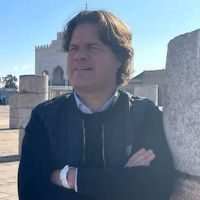
Short Bio: Coen HUBERS Msc has different roles within the Dutch Agrifood Ecosystem working within Triple Helix settings. As accelerator at ACCEZ a partnership of the Province of South Holland, Leiden University, TU Delft, Erasmus University Rotterdam and Wageningen UR he’s been part of an industry wide transition process towards a more sustainable horticulture cluster. Currently he’s involved in the process of creating the knowledge infrastructure of newly created FloraCampus in collaboration with the World Horti Centre. Besides he has active involvement within the Foundation African Greenports in setting up horticulture clusters in both Nigeria and Morocco. He graduated at Rotterdam School of Management in 2003 and has a specialization in Agricultural Economics from Tilburg University.